How to Read Fear and Greed Index Right
A lot of traders only notice the Fear and Greed Index after the market has already made its move. Bitcoin rips, altcoins wake up, and suddenly everyone wants to know how to read fear and greed index data like it was a crystal ball. It is not. But it is a useful sentiment gauge when you treat it as context instead of a trading signal on its own.
In crypto, sentiment changes fast and often overshoots. That is exactly why this index matters. It gives you a quick read on whether the market is leaning defensive, euphoric, or somewhere in between, which can help you avoid buying tops out of FOMO or panic-selling local bottoms.
How to read fear and greed index at a glance
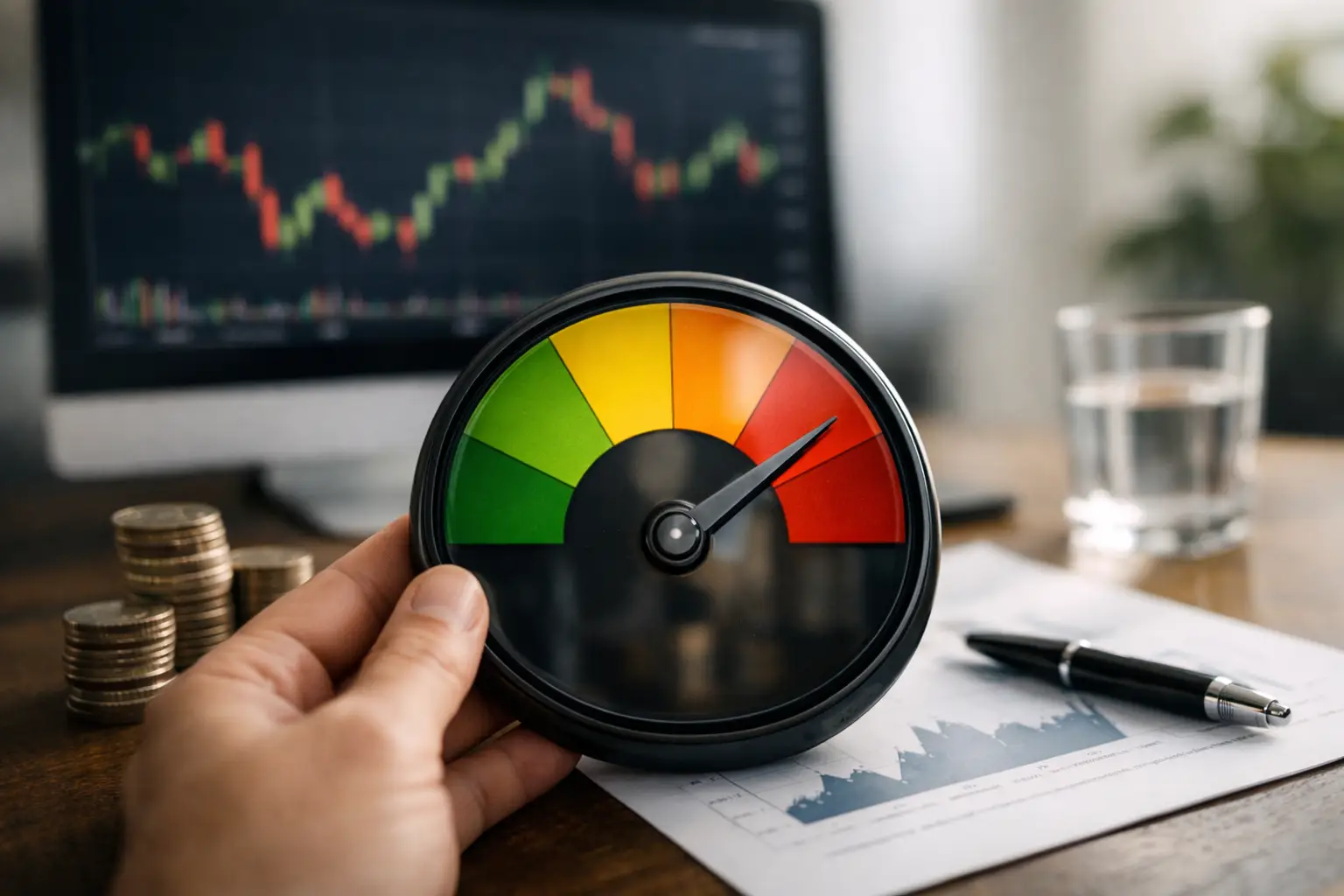
The Fear and Greed Index usually runs from 0 to 100. Lower readings signal fear. Higher readings signal greed. The midpoint suggests a more balanced market, though crypto rarely stays balanced for long.
Most traders break it down like this: extreme fear sits near the bottom of the range, fear follows above that, neutral occupies the middle, greed comes next, and extreme greed lives near the top. If the reading is 20, the market is under stress. If it is 80, optimism is running hot. That part is simple.
What matters more is the backdrop. A score of 75 after a long uptrend means something different than a score of 75 after a sharp recovery from a crash. The number itself is just the headline. The trend behind it is the real story.
What the index is actually measuring
The index is designed to capture market emotion using several inputs. Depending on the version you are looking at, those inputs can include volatility, momentum, trading volume, social sentiment, market dominance, and search trends. In crypto, these components can shift quickly because narratives rotate fast across Bitcoin, Ethereum, meme coins, AI tokens, and smaller altcoin sectors.
That matters because the index is not measuring value. It is measuring behavior. It tells you how participants are acting, not whether an asset is objectively cheap or expensive.
For example, if volatility spikes and prices dump hard, fear tends to rise. If price momentum is strong, volume expands, and social media turns aggressively bullish, greed tends to climb. In both cases, the index reflects crowd psychology more than fundamentals.
This is where many newer traders get tripped up. They see extreme fear and assume buy immediately. Or they see extreme greed and assume short immediately. Real markets are messier than that. Fear can persist for weeks in a downtrend, and greed can stay elevated much longer than skeptics expect during a strong bull phase.
How traders use the signal without misreading it
The best use of the index is as a filter, not a trigger. It helps frame your next decision, but it should not make the decision for you.
If the market is in extreme fear, that can tell you selling pressure may be stretched and sentiment is washed out. That does not guarantee a reversal today. It may simply mean you should stop chasing downside momentum and start watching for confirmation. That confirmation could be a reclaim of key support, a volume shift, a bounce in open interest structure, or strength in Bitcoin after a macro scare.
On the other side, if the index is flashing extreme greed, it does not automatically mean the top is in. It may mean risk is rising, traders are crowded long, and entries need to be tighter. In practice, that can lead you to reduce size, take partial profits, or wait for a reset instead of buying a breakout after three green candles.
For active traders, the index is often most useful at emotional extremes. For position traders and investors, it can help with pacing. If sentiment is deeply fearful but your long-term thesis is intact, that may be a better environment for gradual accumulation than periods when everyone on the timeline is calling for new all-time highs.
Read the direction, not just the number
One of the biggest mistakes is treating the index like a static label. A reading of 60 can be less bullish than a reading of 55 if momentum is fading and the market is rolling over. A reading of 25 can be more constructive than 35 if panic is easing and price is starting to stabilize.
In other words, you want to know whether fear is building or fading, and whether greed is accelerating or cooling. Direction often gives you more edge than the absolute score.
A practical way to think about it is this: rising greed in a healthy trend may confirm risk appetite, but rising greed after a vertical move can warn that the trade is crowded. Rising fear during a clean correction may just reflect short-term stress, while rising fear during a broader breakdown can signal deeper risk-off conditions.
That is why comparing the current reading to the previous week can be more useful than reacting to one daily print.
Why crypto makes this index more extreme
Crypto is not the S&P 500. It trades around the clock, narratives spread at internet speed, leverage is widely accessible, and retail participation can move sentiment much faster than in traditional markets. Add liquidations, exchange flows, ETF headlines, regulatory news, and macro surprises, and emotion becomes part of the market structure.
That is also why the Fear and Greed Index tends to work best as part of a broader dashboard. On a platform like CryptopiaNews, where sentiment sits alongside price performance, trend tracking, and category-level movement, the index becomes more useful because it is not floating alone. You can compare market mood with what Bitcoin dominance is doing, whether meme coins are overheating, or whether ETH and Layer 2 names are actually participating in the move.
If the index says greed but market breadth is weak, that is a yellow flag. If the index says fear but high-conviction sectors are holding support, that may suggest the panic is more emotional than structural.
Common mistakes when using the Fear and Greed Index
The first mistake is using it as a standalone buy or sell signal. Sentiment is one layer of analysis, not the whole stack.
The second is ignoring timeframe. A short-term trader and a long-term investor should read the same score differently. Extreme fear may be a swing-trading opportunity for one person and just noise inside a longer accumulation plan for another.
The third is forgetting market regime. In a bull market, greed can stay elevated while price keeps climbing. In a bear market, fear can dominate even after oversold bounces. Regime decides how much weight the signal deserves.
The fourth is applying the reading to every coin equally. A market-wide sentiment gauge is usually centered on broader crypto conditions, especially Bitcoin. That does not mean your low-cap altcoin will behave the same way. Some sectors detach from the broader mood, especially during narrative-driven rotations.
How to combine it with other market signals
If you want a cleaner process, pair the index with price structure first. Sentiment works better when you know whether the market is trending, consolidating, or breaking down.
Then look at volume and momentum. Greed backed by rising spot demand is different from greed fueled by thin liquidity and social hype. Fear with strong buyer response is different from fear with no bids underneath.
It also helps to watch Bitcoin dominance and sector rotation. Sometimes the index reads hot because capital is concentrated in Bitcoin while altcoins lag. Other times greed spreads across the board, which can signal late-cycle risk taking.
Macro context matters too. A fear reading after a CPI shock, ETF rumor, or regulatory headline can reverse quickly. A fear reading tied to deeper liquidity stress or a major breakdown may not.
The more your signals line up, the more useful the index becomes. If sentiment is fearful, price is sitting on major support, and selling pressure is slowing, that is a stronger setup than fear alone. If sentiment is greedy, price is extended, and volume is fading, that is a better warning than greed alone.
So, what is a good reading?
There is no magic number. That is the honest answer.
Lower readings can create opportunity, but only if the market is near a level where buyers might actually step in. Higher readings can signal overheating, but only if price is stretched enough for profit-taking to matter. Context beats thresholds.
A smart way to use the index is to ask a few quick questions every time you check it. Is the market getting more emotional or less? Is price confirming that emotion or diverging from it? And does this sentiment match the broader regime, or is it starting to look excessive?
That mindset keeps you from treating a simple score like prophecy. The Fear and Greed Index is best used as a sentiment compass. It can point to where the crowd is leaning, but you still need a map.
The edge is not in seeing fear or greed first. It is in staying clear-headed when everyone else is reacting to it.
0 Comments
Join the conversation
Sign in to comment